


Digital marketing is one of the most effective ways for businesses to reach customers, build brand awareness, increase website traffic, and generate leads online. As more people use search engines, social media, websites, and mobile devices, businesses need a strong digital marketing strategy to connect with their target audience.
What Is Digital Marketing?
Digital marketing refers to promoting products, services, or brands through digital channels such as search engines, websites, social media, email, and online advertising.
Unlike traditional marketing, digital marketing allows businesses to communicate with their audience through measurable online activities. Businesses can track website visits, clicks, leads, conversions, and customer engagement to understand what is working.
A successful digital marketing strategy combines different online channels to attract potential customers and guide them through the buying journey.
Why Is Digital Marketing Important?
Digital marketing is important because customers increasingly search for information, compare products, and make purchasing decisions online.
Some major benefits of digital marketing include:
- Increases online visibility: Businesses can reach more people through search engines and social media.
- Brings targeted traffic: Digital campaigns can target people based on their interests, location, behavior, and search intent.
- Generates leads: Businesses can use websites, landing pages, forms, and advertisements to attract potential customers.
- Improves customer engagement: Social media and email marketing help businesses communicate directly with customers.
- Measures performance: Digital marketing tools provide valuable data about traffic, engagement, and conversions.
- Supports business growth: A well-planned strategy can help businesses attract new customers and retain existing ones.
Main Types of Digital Marketing
Digital marketing includes several important channels. Each channel has a different purpose and can support different stages of the customer journey.
1.Search Engine Optimization (SEO)
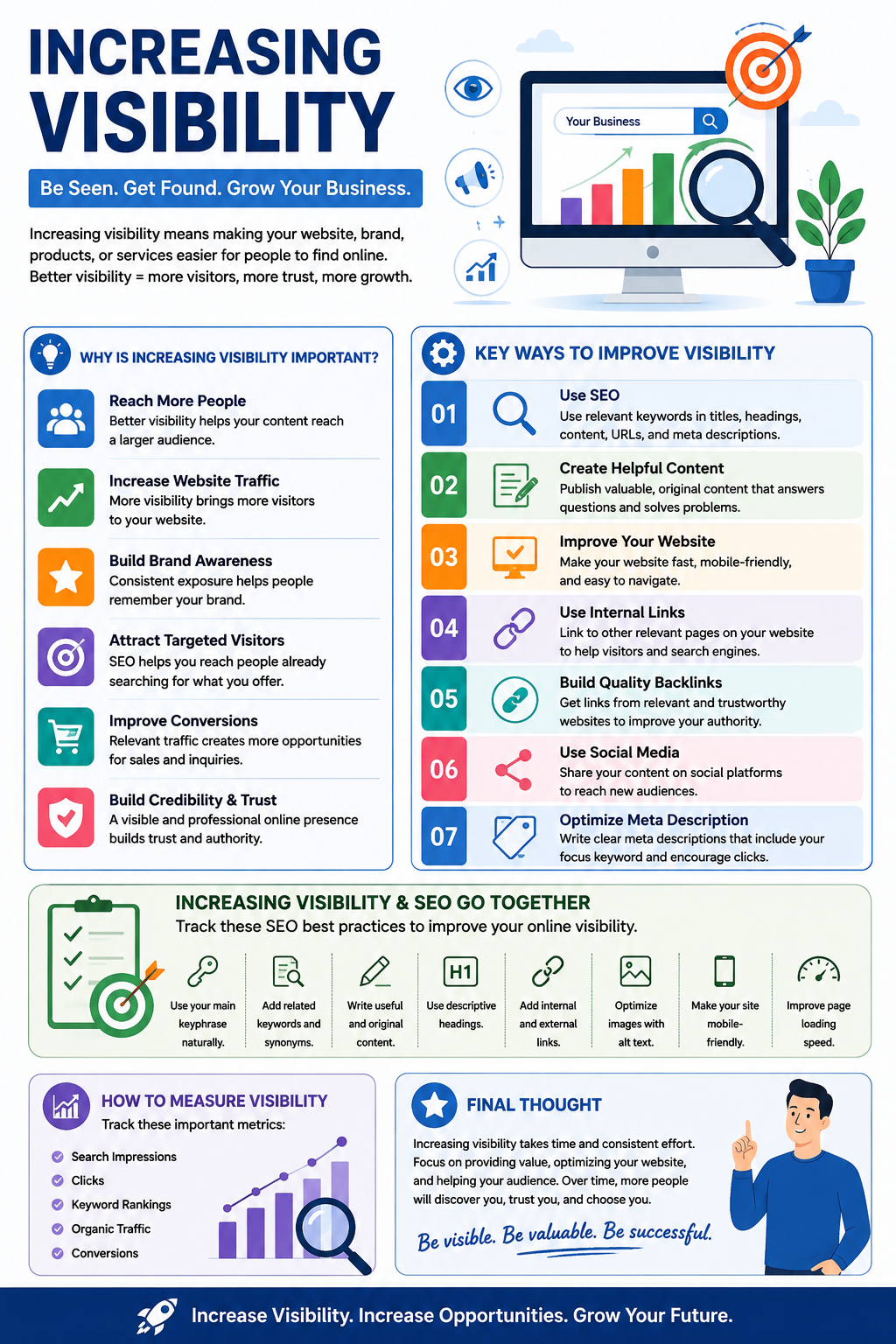
Search Engine Optimization, commonly known as SEO, focuses on improving a website so that it can appear higher in search engine results.
SEO involves:
- Keyword research
- Creating useful content
- Optimizing page titles and meta descriptions
- Improving website structure
- Adding internal and external links
- Optimizing images
- Improving website speed and mobile usability
A strong SEO strategy can help businesses attract organic traffic without relying entirely on paid advertising.
2.Content Marketing
Content marketing involves creating useful and relevant content for a target audience. Content can include blog posts, guides, videos, infographics, case studies, and other resources.
Good content should answer customers’ questions and provide genuine value. It can also improve search visibility and help establish a business as a trusted source of information.
3.Social Media Marketing
Social media marketing uses platforms such as Facebook, Instagram, LinkedIn, and other social networks to promote a business and communicate with customers.
Businesses can use social media to:
- Share educational content
- Promote products and services
- Build brand awareness
- Engage with followers
- Drive website traffic
- Generate leads
Consistent and valuable content can help businesses build stronger relationships with their audience.
4.Email Marketing
Email marketing allows businesses to communicate directly with subscribers and customers.
Businesses can send:
- Newsletters
- Product updates
- Special offers
- Educational information
- Personalized recommendations
- Follow-up messages
Email marketing can be particularly useful for customer retention because it helps businesses maintain regular communication with their audience.
5.Pay-Per-Click Advertising
Pay-per-click (PPC) advertising allows businesses to display paid advertisements on search engines and other online platforms.
Advertisers generally pay when someone clicks on an advertisement. PPC can provide faster visibility than organic SEO, especially when launching a new product or targeting competitive keywords.
However, campaigns should be carefully monitored because advertising costs can increase if targeting and conversion tracking are not properly managed.
6. Affiliate Marketing
Affiliate marketing involves working with individuals or organizations that promote a business’s products or services.
The affiliate may receive a commission when their promotional activity generates a sale or another desired action.
This approach can help businesses reach new audiences while paying based on specific results.
7. Influencer Marketing
Influencer marketing involves collaborating with people who have an established audience on social media or other digital platforms.
An appropriate influencer can introduce a product or service to a relevant audience and help increase awareness, engagement, and sales.
Businesses should focus on audience relevance and trust, rather than choosing an influencer only because they have a large number of followers.
How Does Digital Marketing Work?
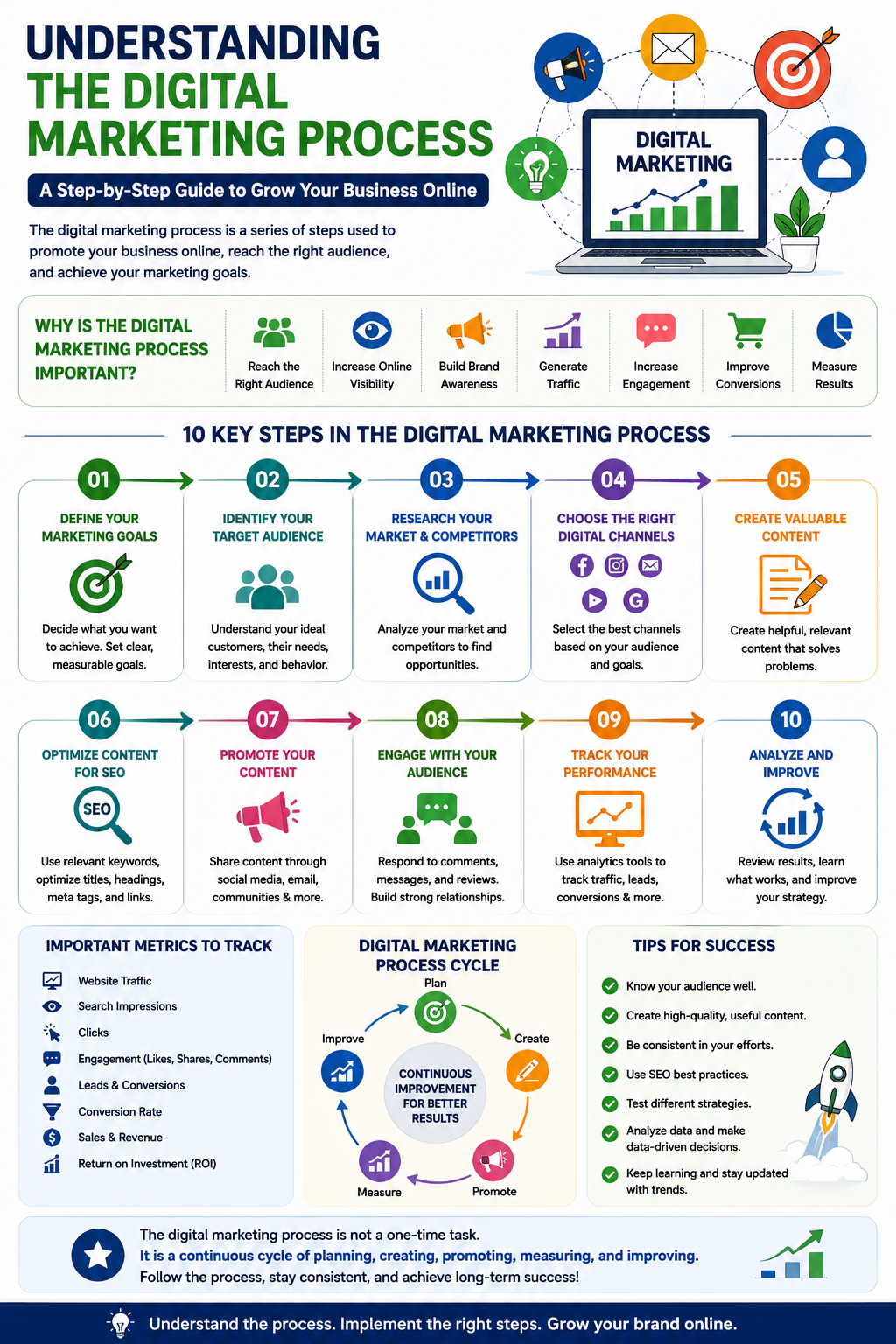
A typical digital marketing process can be divided into several stages.
Step 1: Identify Your Target Audience
First, understand who your ideal customers are. Consider their needs, interests, problems, online behavior, and purchasing habits.
Step 2: Set Marketing Goals
Define clear objectives. For example, your goal could be to increase website traffic, generate leads, improve conversions, or increase brand awareness.
Step 3: Choose the Right Digital Channels
Select channels that match your audience and goals. For example, SEO may be useful for attracting search traffic, while social media can help increase engagement and brand awareness.
Step 4: Create Valuable Content
Create content that answers your audience’s questions and solves their problems. Use your target keywords naturally without making the content difficult to read.
Step 5: Promote Your Content
Share your content through appropriate channels such as search engines, social media, email newsletters, and paid advertising.
Step 6: Measure Your Results
Track important metrics such as website traffic, engagement, leads, conversion rates, and return on investment.
Step 7: Improve Your Strategy
Use your performance data to identify what works and what needs improvement. Digital marketing is an ongoing process, so regularly updating your strategy is important.
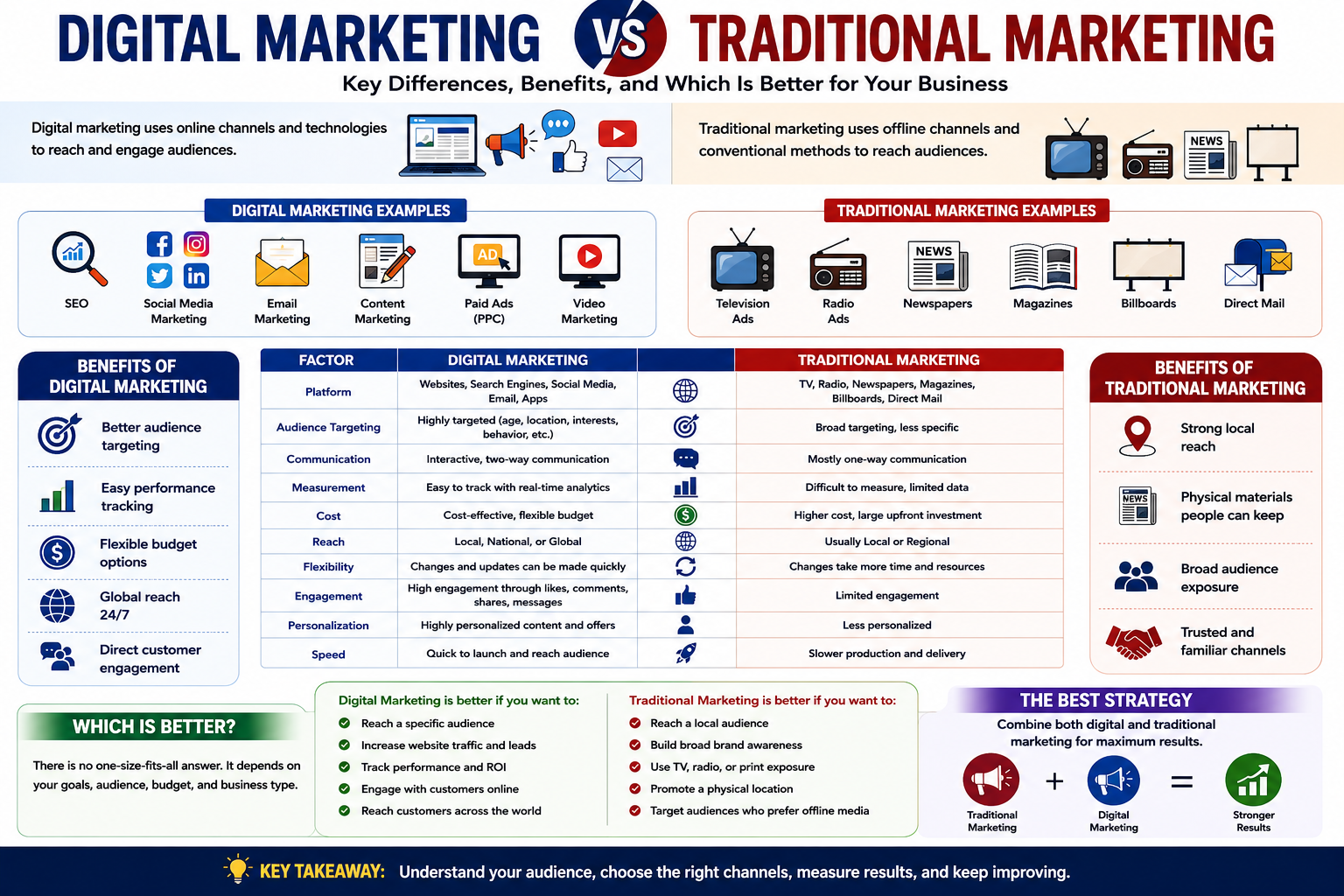
Digital Marketing vs Traditional Marketing
Traditional marketing uses channels such as television, newspapers, magazines, radio, and billboards. Digital marketing uses online channels such as search engines, websites, social media, email, and online advertising.
One major advantage of digital marketing is its ability to provide detailed performance data. Businesses can monitor user interactions and adjust campaigns based on results.
Traditional marketing can still be effective for certain businesses and audiences. Therefore, companies should choose marketing channels based on their goals, audience, and budget.
Benefits of Digital Marketing for Small Businesses
Digital marketing can be particularly valuable for small businesses because it provides access to online audiences without requiring the same level of investment as some traditional advertising methods.
Small businesses can use digital marketing to:
- Build an online presence
- Reach local customers
- Attract targeted website visitors
- Generate leads
- Promote products and services
- Build customer relationships
- Compete with larger businesses
A combination of local SEO, social media, content marketing, and email marketing can create a strong foundation for small-business growth.
How to Create a Successful Digital Marketing Strategy
A successful digital marketing strategy should focus on the customer rather than simply promoting a product.
Start by understanding your audience and researching what they are searching for online. Then create useful content that matches their needs.
Make sure your website is easy to navigate and works well on mobile devices. Use clear calls to action so visitors understand what they should do next.
Finally, measure your results regularly. Data can help you identify successful campaigns and make better marketing decisions.
Common Digital Marketing Mistakes to Avoid
Businesses can improve their results by avoiding common mistakes such as:
- Targeting an unclear audience
- Using keywords unnaturally
- Publishing low-quality content
- Ignoring mobile users
- Not tracking conversions
- Focusing only on website traffic
- Posting inconsistently on social media
- Ignoring customer feedback
- Failing to update old content
Avoiding these mistakes can make your digital marketing efforts more effective.
Conclusion
Digital marketing provides businesses with many ways to reach, engage, and convert customers online. From SEO and content marketing to social media, email marketing, and PPC advertising, each channel can play an important role in building an online presence.
The best results come from using the right combination of digital marketing channels, creating valuable content, understanding the target audience, and continuously measuring performance. With a clear strategy and consistent effort, businesses can use digital marketing to increase visibility, attract targeted traffic, generate leads, and support long-term growth.
Digital marketing is no longer optional — it’s essential. Whether you’re a start-up or a global enterprise, digital marketing offers the tools to connect with customers, build brand awareness, and drive growth in a competitive marketplace.
This guide breaks down everything you need to know about digital marketing: its core principles, types, and how to implement strategies that deliver results.



Leave a Reply