

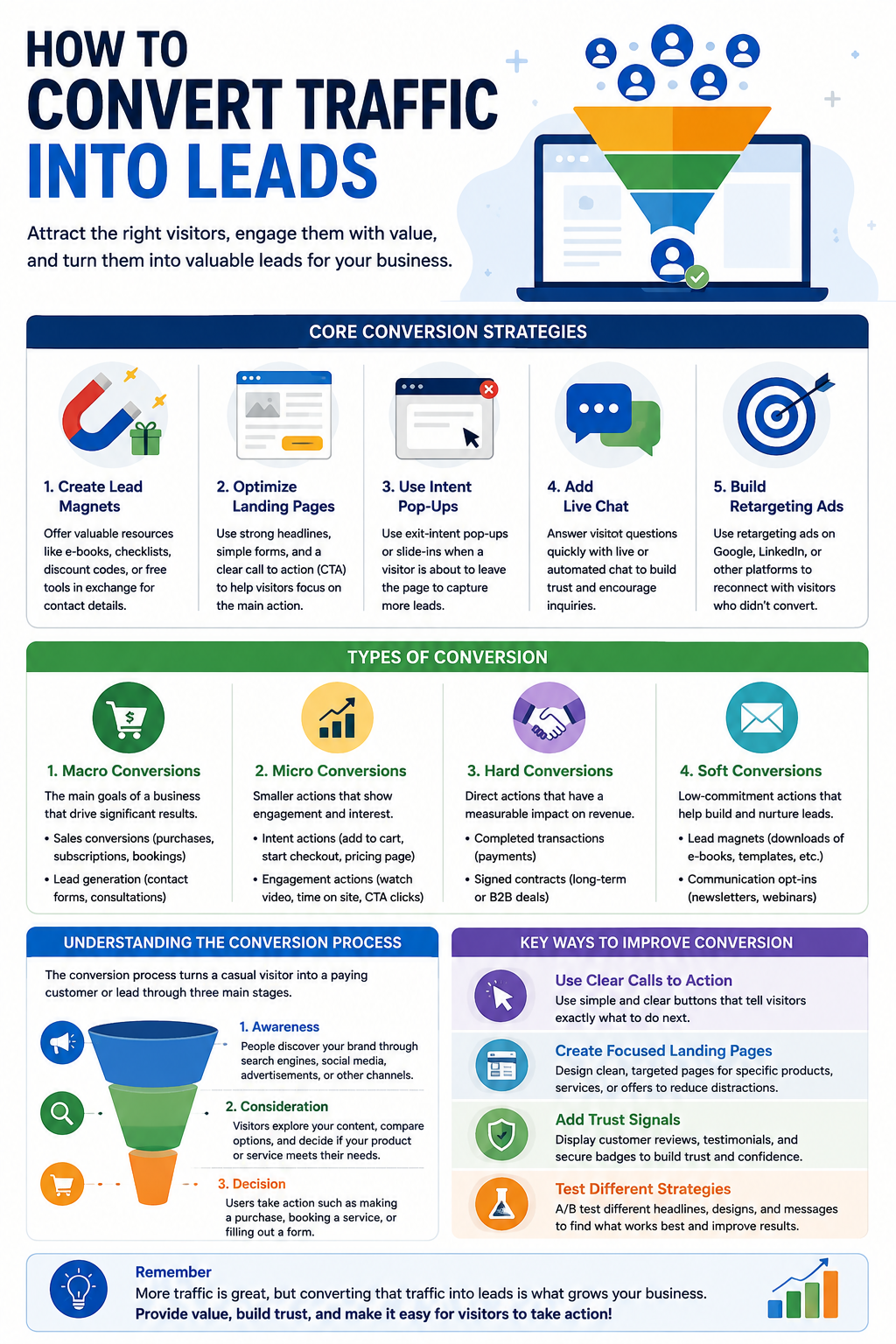
Converting website traffic into leads requires clear value, simple steps, and targeted engagement. First, businesses should attract visitors with useful content. Next, they can encourage visitors to take action with lead magnets, optimized landing pages, and clear calls to action. Finally, behavioral tracking can help businesses understand visitor actions and improve conversion rates.
Core Conversion Strategies
Create Lead Magnets
First, offer valuable resources such as e-books, checklists, discount codes, or free tools in exchange for contact details. As a result, visitors have a reason to share their information.
Optimize Landing Pages
Next, use strong headlines, simple forms, and a clear call to action (CTA). This way, visitors can focus on the main action without unnecessary distractions.
Use Intent Pop-Ups
For example, use exit-intent pop-ups or slide-ins when a visitor is about to leave the page. This gives you another chance to capture leads before they leave.
Add Live Chat
In addition, use live chat to answer visitor questions quickly. This can help visitors find the information they need and encourage them to submit an inquiry.
Build Retargeting Ads
Finally, use retargeting ads on platforms such as Google or LinkedIn to reconnect with visitors who left without converting. This can help bring interested visitors back to your website.
Types of Conversion
In digital marketing, a conversion occurs when a user completes a desired action. For example, this could include making a purchase or signing up for a newsletter. Generally, conversions can be divided into four main types: macro conversions, micro conversions, hard conversions, and soft conversions.
1. Macro Conversions
Macro conversions are the main goals of a business. They usually represent important milestones in the customer journey.
- Sales conversions: Completing a purchase on an e-commerce website, subscribing to a paid software plan, or booking a service.
- Lead generation conversions: Submitting a contact form or booking a sales consultation.
2. Micro Conversions
Micro conversions are smaller actions that show user engagement. Although they may not generate revenue immediately, they can show that a customer is moving toward a larger conversion.
- Intent actions: Adding items to a shopping cart, starting checkout, or viewing a pricing page.
- Engagement actions: Watching a promotional video, spending time on a website, or clicking a call to action (CTA).
3. Hard Conversions
Hard conversions have a direct and measurable effect on revenue. For example, they may include:
- Completed transactions: Finalizing a payment for a product or service.
- Signed contracts: Finalizing a long-term service agreement or B2B deal.
4. Soft Conversions
Soft conversions require a lower level of commitment. Instead, they help build an audience, capture leads, and nurture potential customers over time.
- Lead magnets: Downloading a whitepaper, e-book, or template.
- Communication opt-ins: Subscribing to a weekly email newsletter or registering for an upcoming webinar.
Understanding the Conversion Process
The conversion process in digital marketing describes how a casual visitor becomes a lead or paying customer. In most cases, visitors move through three main stages: Awareness, Consideration, and Decision.
Stages of the Conversion Funnel
Awareness: First, people discover your brand through search engines, social media, advertisements, or other marketing channels.
Consideration: Next, visitors read your content, explore product options, and compare prices. At this stage, they decide whether your product or service meets their needs.
Decision: Finally, users take an important action, such as buying a product, booking a service, or filling out a form.
Key Ways to Improve Conversion
Clear Calls to Action
Use simple buttons that tell visitors what to do next. For example, use phrases such as “Get Started,” “Download Now,” or “Contact Us.”
Landing Pages
Create clean and focused pages for specific products, services, or offers. This helps visitors understand the offer and take action.
Trust Signals
In addition, display customer reviews, testimonials, and secure checkout badges to build trust. As a result, visitors may feel more confident about taking action.
Testing
Finally, compare different page designs, headlines, and messages to find what works best. Over time, testing can help improve your conversion rate.




Leave a Reply