

Digital Marketing vs Traditional Marketing: Complete Guide
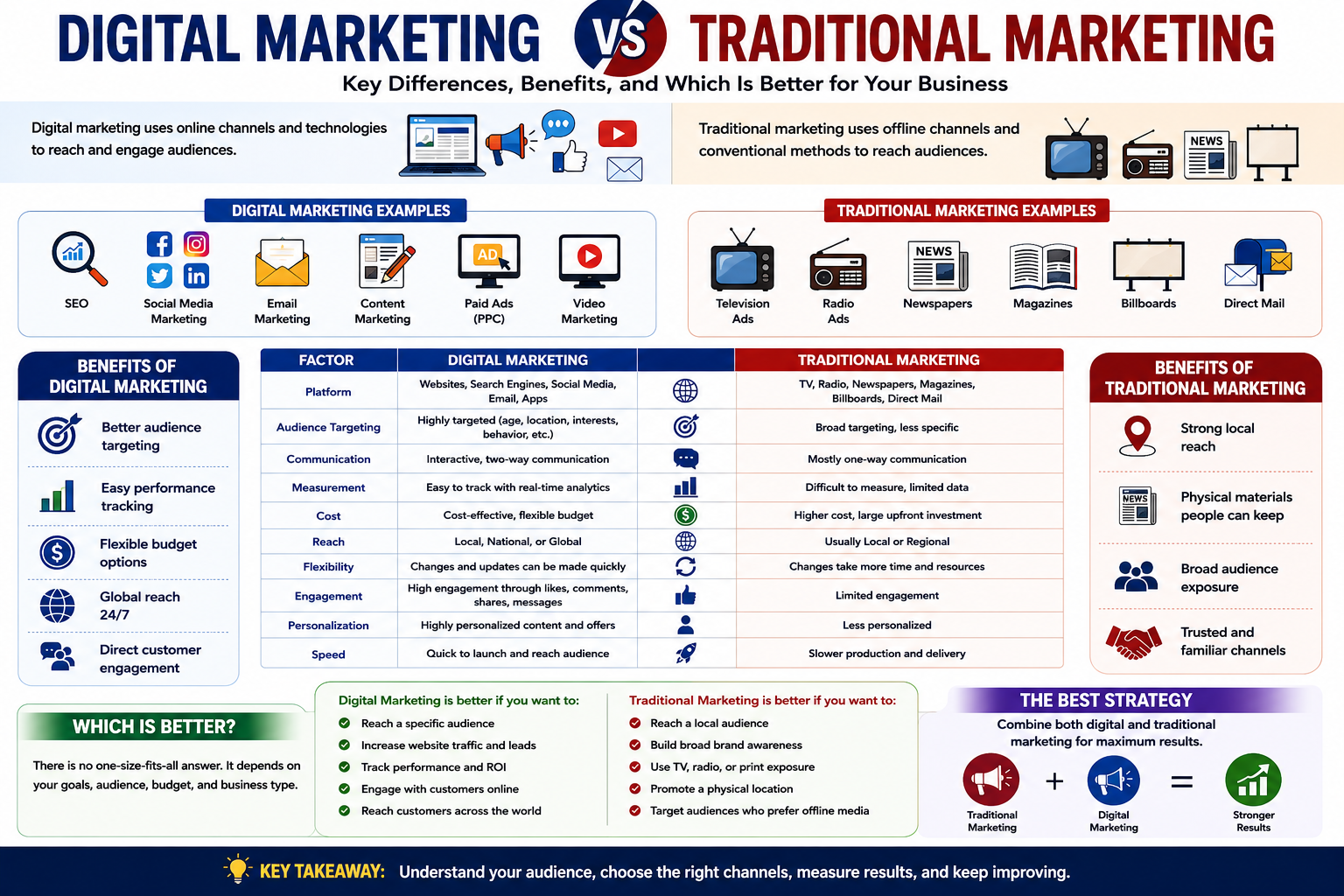
Digital Marketing vs Traditional Marketing is an important comparison for businesses that want to reach the right audience. Both methods can promote products, services, and brands. However, they use different channels and strategies.
Digital marketing uses online platforms such as search engines, social media, websites, and email. Traditional marketing uses offline channels such as television, newspapers, radio, magazines, billboards, and direct mail.
Understanding the difference can help businesses choose the right marketing strategy.
What Is Digital Marketing?
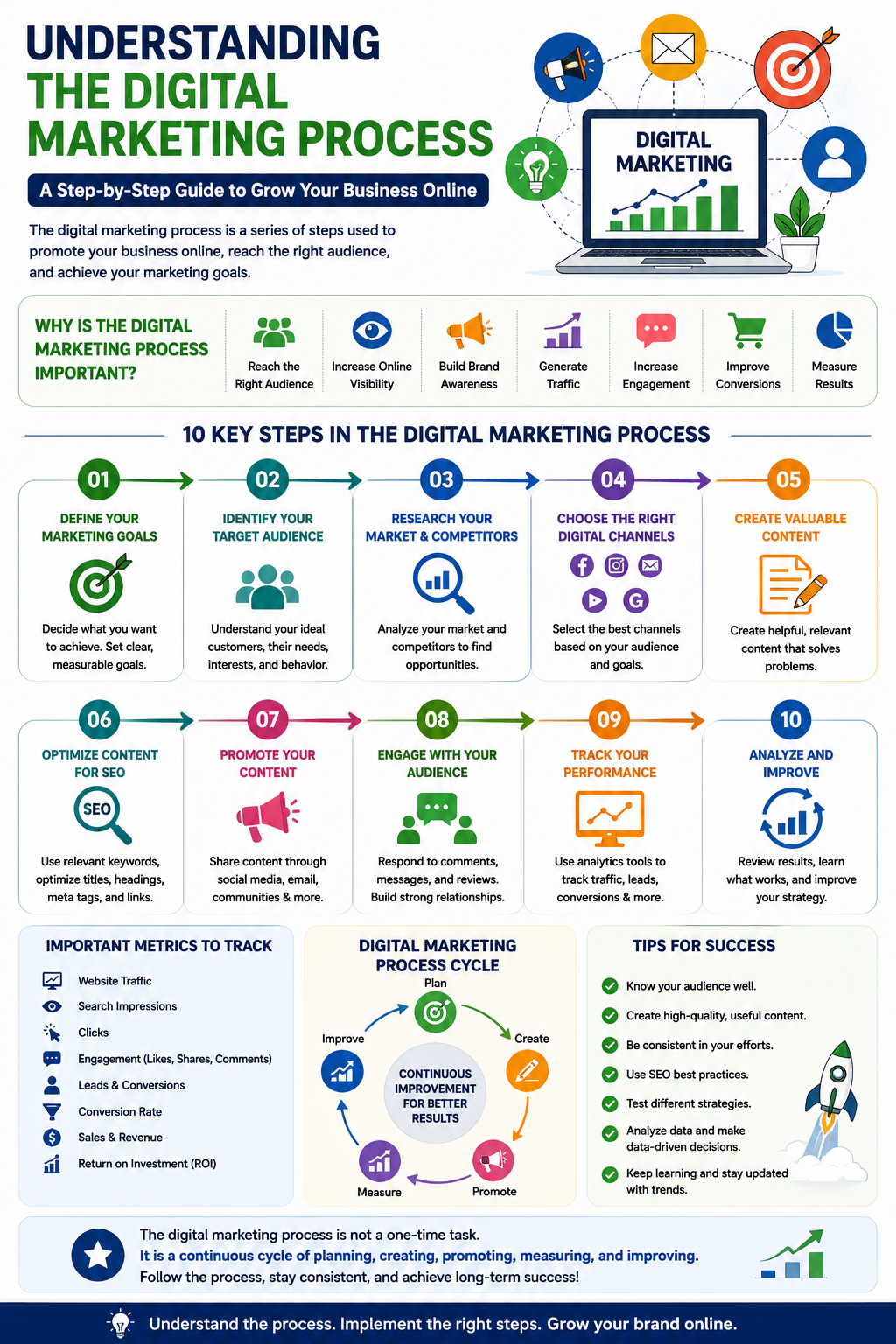
Digital marketing is the promotion of products or services through digital channels. It allows businesses to connect with customers online.
Common digital marketing channels include:
- Search engine optimization (SEO)
- Social media marketing
- Email marketing
- Content marketing
- Search advertising
- Video marketing
- Influencer marketing
- Website marketing
Digital marketing allows businesses to target specific audiences and measure campaign performance.
What Is Traditional Marketing?
Traditional marketing uses offline methods to promote a business, product, or service. It has been used by businesses for many years.
Common traditional marketing channels include:
- Television advertisements
- Radio advertisements
- Newspapers
- Magazines
- Billboards
- Posters
- Brochures
- Direct mail
- Outdoor advertising
Traditional marketing can be useful for reaching local audiences and large groups of people.
Digital Marketing vs Traditional Marketing: Key Differences
The main difference is the channel used to reach customers.
Digital marketing uses online platforms. Traditional marketing uses offline platforms.
Here are some important differences:
| Factor | Digital Marketing | Traditional Marketing |
|---|---|---|
| Platform | Websites, search engines, social media, email | TV, radio, newspapers, magazines, billboards |
| Audience targeting | Highly targeted | Usually broader |
| Communication | Often interactive | Mostly one-way |
| Measurement | Easy to track with analytics | More difficult to measure precisely |
| Cost | Can start with a smaller budget | Often requires higher upfront costs |
| Reach | Global or local | Usually local, regional, or national |
| Flexibility | Campaigns can be changed quickly | Changes can be slower |
| Engagement | High potential for interaction | Limited direct interaction |
| Personalization | Highly customizable | Usually less personalized |
| Speed | Content can be published quickly | Production may take more time |
Benefits of Digital Marketing
1. Better Audience Targeting
Digital marketing allows businesses to target audiences based on interests, location, behavior, demographics, and search intent.
This can help businesses reach people who are more likely to be interested in their products or services.
2. Easy Performance Tracking
Businesses can track important metrics such as website traffic, clicks, engagement, leads, conversions, and sales.
This data helps marketers understand campaign performance.
3. Flexible Budget
Digital campaigns can often be started with a small budget. Businesses can increase or reduce spending based on performance.
4. Global Reach
A website can be accessed by people around the world. Social media and online advertising can also help businesses reach international audiences.
5. Direct Customer Engagement
Digital platforms allow businesses to communicate with customers through comments, messages, email, and social media.
This can help build relationships and trust.
Benefits of Traditional Marketing
1. Strong Local Reach
Traditional marketing can work well for businesses that serve a specific local area.
For example, billboards, newspapers, flyers, and local radio can reach people in a particular community.
2. Physical Marketing Materials
Brochures, business cards, posters, and direct mail give customers something physical to keep.
This can help increase brand recognition.
3. Broad Audience Exposure
Television, radio, and outdoor advertising can reach large audiences.
These channels can be useful for increasing general brand awareness.
4. Familiar and Trusted Channels
Many people are familiar with traditional advertising methods. Some audiences may respond well to newspapers, television, radio, and printed materials.
Which Is More Cost-Effective?
The answer depends on the business, audience, campaign goals, and marketing channel.
Digital marketing can provide flexible budgets and detailed performance data. Businesses can test different campaigns and adjust their spending.
Traditional marketing may require higher upfront costs for television, print, radio, or outdoor campaigns.
For many businesses, combining both approaches can provide better results than relying on only one method.
Digital Marketing vs Traditional Marketing: Which Is Better?
There is no single answer for every business.
Digital marketing may be better when you want to:
- Reach a specific audience.
- Increase website traffic.
- Generate online leads.
- Track campaign performance.
- Engage with customers online.
- Reach customers across different locations.
Traditional marketing may be better when you want to:
- Reach a local audience.
- Build broad brand awareness.
- Use television or radio exposure.
- Promote a physical location.
- Connect with audiences who respond well to offline advertising.
The best choice depends on your target audience and marketing objectives.
Combining Digital and Traditional Marketing
Businesses do not always need to choose between digital and traditional marketing.
A combination of both strategies can create a stronger marketing campaign.
For example, a business could use a billboard to build awareness and include its website address. Customers can then visit the website to learn more.
Another example is a newspaper advertisement that promotes a social media campaign. This connects offline advertising with online engagement.
This approach is often called integrated marketing.
Digital Marketing and Traditional Marketing Example
Imagine a new restaurant wants to attract customers.
The restaurant could use traditional marketing by placing advertisements in a local newspaper and distributing flyers.
At the same time, it could use digital marketing by creating a website, improving its local SEO, posting on social media, and sending email offers.
The restaurant can then monitor online traffic and customer responses. It can also ask customers how they heard about the business.
This combination gives the restaurant more opportunities to reach potential customers.
How to Choose the Right Marketing Strategy
Before choosing a marketing method, consider these questions:
Who Is Your Target Audience?
Understand where your customers spend their time. Younger audiences may spend more time on digital platforms, while other audiences may respond well to television, newspapers, radio, or direct mail.
What Is Your Budget?
Set a realistic marketing budget. Choose channels that provide good value for your business.
What Is Your Goal?
Your goal may be brand awareness, website traffic, lead generation, sales, or customer retention.
Choose marketing channels that support your goal.
How Will You Measure Results?
Decide which metrics you will track. Digital campaigns often provide detailed analytics. Traditional campaigns may require surveys, coupon codes, calls, or customer feedback to measure results.
Digital Marketing vs Traditional Marketing for SEO
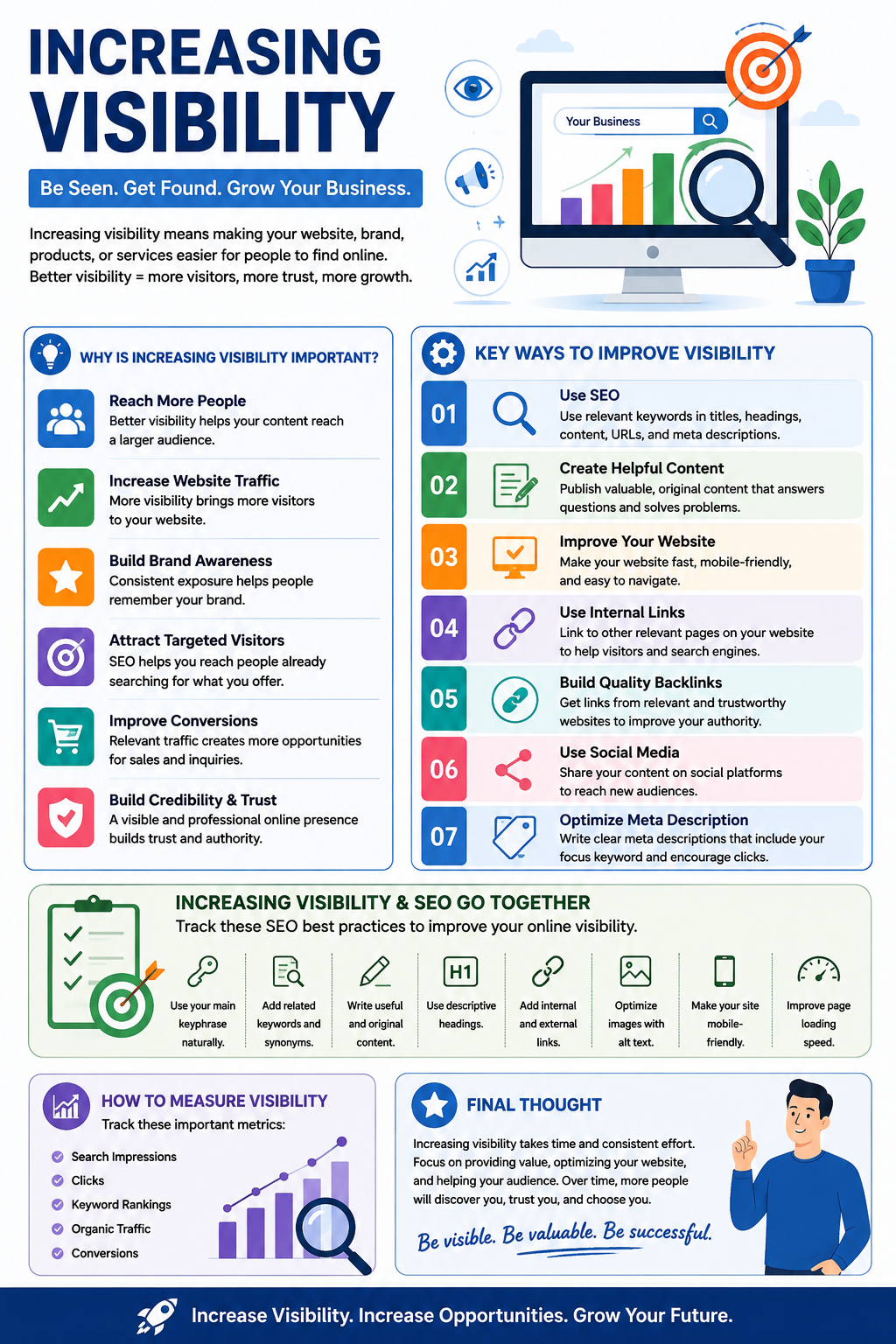
SEO is one of the biggest advantages of digital marketing. Search engine optimization helps websites appear in relevant search results.
Businesses can improve their online visibility by:
- Using relevant keywords.
- Creating useful content.
- Optimizing page titles.
- Writing strong meta descriptions.
- Adding internal links.
- Building quality backlinks.
- Improving website speed.
- Making websites mobile-friendly.
- Optimizing images.
Traditional marketing does not directly use SEO. However, offline campaigns can increase brand awareness and may encourage people to search for a business online.
Conclusion
Digital Marketing vs Traditional Marketing is not simply about choosing one method over another. Both approaches have different strengths.
Digital marketing offers strong targeting, measurable results, flexible budgets, and direct online engagement. Traditional marketing can provide broad exposure, strong local reach, and physical brand experiences.
The best strategy depends on your audience, goals, budget, and business type. In many cases, combining digital and traditional marketing can create a balanced and effective marketing strategy.
The key is to understand your audience, choose the right channels, measure your results, and improve your marketing efforts over time.




Leave a Reply